Showing posts sorted by date for query gail patrick. Sort by relevance Show all posts

Saturday, March 7, 2026

Gail Patrick & O.R. Cohen in 1933 Newspaper Ads


I've mentioned in several recent posts that I've been perusing numerous issues of the Gadsden Times newspaper from the 1930s and 1940s saved by my paternal grandmother Rosa Mae Wright. She also had some old issues of the Birmingham News mixed in the batch. I'm finding lots of fascinating articles and advertisements. The two items here are ads that focus on two people with strong Alabama connections and both appeared in the News on February 16, 1933. 

I've done a number of posts on this blog about both individuals. In 2015 I wrote one of the early "film actresses from Alabama" posts about Gail Patrick. Since then I've covered a couple of her early films, "The Preview Murder Mystery" and "Murder at the Vanities" and an appearance in a radio production of "The Maltese Falcon". I also wrote about her work as Executive Producer on the classic "Perry Mason" TV series. 

Octvaus Roy Cohen [1891-1959] was a very prolific author of novels and short stories who lived in Birmingham during much of the 1920s and 1930s. He founded a group of local writers called The Loafers that included novelists Jack Bethea, James Saxon Childers and others. During those decades and beyond he published numerous short stories set in the city and featuring black characters; those stories are considered racially insensitive at best today. Cohen also published stand-alone crime novels and a series of stories about private detective Jim Hanvey. Seven of those tales were published together in 2021 in the Library of Congress' Crime Classics collection. 

I've posted twice about Cohen's books and their covers, here and here. He also had various stories and novels adapted for films. I Love You Again, a 1940 picture starring Myrna Loy and William Powell, is one of those; The Big Gamble, which happens to star Birmingham native Dorothy Sebastian is another. 

You can read more about The Loafers in John W. Bloomer's article ""'The Loafers' in Birmingham in the Twenties", Alabama Review April 1977. 

Comments on the advertisements are below. 


Patrick, a Birmingham native, graduated from Howard College [now Samford University] and completed two years at the University of Alabama law school. In 1932 she entered a Paramount Pictures contest for the "Panther Woman" character in an upcoming film, Island of Lost Souls. She was picked as one of four finalists from the 60,000 applicants. Patrick did not win, but was offered a standard studio contract. She met with studio brass and negotiated a better contract for herself. That law school training came in handy. 

The Mysterious Rider was the second of four films she made that year, playing Mary Benton Foster. The star of the film was Kent Taylor, who made some 110 movies in his career. In one of the others in 1932 she played a secretary and the other two were uncredited bit parts, the last ones she had in a career of more than 60 films made between 1932 and 1948. She did not watch herself in a film until 1979, when she finally screened one of her most famous, My Man Godfrey [1936]. 

The Galax Theater opened on 2nd Avenue North in Birmingham before 1920, showing silent films. The theater operated until at least 1945 and was torn down in 1963; the BTNB building opened on the site the following year. 


Zane Grey published more than 90 books, most of them Western novels. The Mysterious Rider appeared in 1921. 


Here's the ad for Cohen's radio mystery. Westinghouse was once a radio and television production behemoth that merged with CBS in 2000. This page has a paragraph about The Townsend Murder Mystery, radio broadcast, information about two of Cohen's detective characters in other fiction, David Carroll and Jim Hanvey, and a bibliography of Cohen's novels. 

On that page author Jon Breen says, "In an unusual and unsuccessful experiment, Cohen’s radio serial The Townsend Murder Mystery (1933) was published in book form the same year it was broadcast coast to coast (from WJZ’s New York studios) on NBC.  However it played on the air, it doesn’t work as a print mystery."


Excerpt from the listing of radio programming in the Birmingham News for February 16, 1933. KDKA is considered the first commercially licensed radio station in the United States, beginning broadcast on November 2, 1920.


This broadcast description was included in the book, which was actually the  script. 


This radio script was published in 1933 by D. Appleton-Century

A photo of Octavus Roy Cohen at Getty Images includes this original caption:
"The famous writer of Negro stories has just completed an original drama for
radio. The Townsend murder mystery, an 18 week mystery serial, begins on
February 14, on 
a coast to coast NBC network. The drama, which will require
a cast of 40 actors will be heard 
three times a week."
I've seen this work described as the "First radio play published in book form" and as the "first mystery novel to revolve around radio."


Jim Reed's wonderful Reed Books & Museum of Fond Memories in Birmingham recently had this item for sale on ABE Books: 

1933: Westinghouse Brochure Promoting Radio Show THE TOWNSEND MURDER MYSTERY By Octavus Roy Cohen (creator of Amos 'n' Andy series) with Illustration of Characters from Show Plus Photos of Westinghouse Products


Apparently Cohen did work briefly on the Amos 'n' Andy radio series but he was most certainly not the "creator". 


Friday, September 15, 2023

Gail Patrick in "The Preview Murder Mystery"

One of the topics I bring out from time to time on this blog is film actresses from the state whose careers began before 1960. I've covered some others after that date, too, but today's post fits that group. 

One of those pre-1960 actresses is Birmingham native Gail Patrick. A career overview I posted in 2015 is here. In 2019 I wrote about her role as a private detective [really!] in Murder at the Vanities, a truly bonkers 1934 pre-code film. In 2020 I posted about her post-acting career as Executive Producer on the classic Perry Mason TV series and her appearance in the final episode. In 2021 I wrote about her role as the femme fatale in The Maltese Falcon--a radio version, but still....

Now we come to her role in The Preview Murder Mystery from 1936. I watched this one recently on TCM and really enjoyed it. There's a rather interesting framing device--it's a movie about the making of a movie and features quick action, witty dialog and some murders. Director Robert Florey would helm over 50 movies and numerous episodes of TV shows in his long career. By the time he made this one, he had already directed such classics as the Marx Brothers first feature, The Cocoanuts [1929] and Murders in the Rue Morgue [1932]. 

The film being filmed is "Song of the Toreador", and we get to see some extensive scenes in its preview screening. We also see even longer scenes involving the filming process, so that the cast and crew of "Toreador" are much of the cast and crew of Preview. Very meta. "Song" is a remake of a silent film starring the late husband of Patrick's character, Claire Woodward Smith. 

A lot of this film's snap, crackle and pop is courtesy of the performances by and dialog written for Reginald Denny and Frances Drake as they play the studio publicity head and his secretary. A running gag is Denny's constant proposals of marriage, and refusals by Drake, whose character is an astrology nut and keeps telling him the stars are not aligned properly.

Catch this movie if you have a chance. It's only an hour long and is available on YouTube

Some more comments are below. 


The entrance to the movie company's lot is actually the entrance to Paramount Studios, lightly disguised. 


The film has a number of shots making interesting compositions. Florey's cinematographer was Karl Struss, who worked on numerous Hollywood films and was a pioneer in 3-D. 


And here she is, ladies and gentlemen, Gail Patrick!


Now we see Patrick as she appears in "Song of the Toreador". 


And now we see Patrick in the preview audience watching herself onscreen.


As the murders mount up, Patrick is questioned by police. 


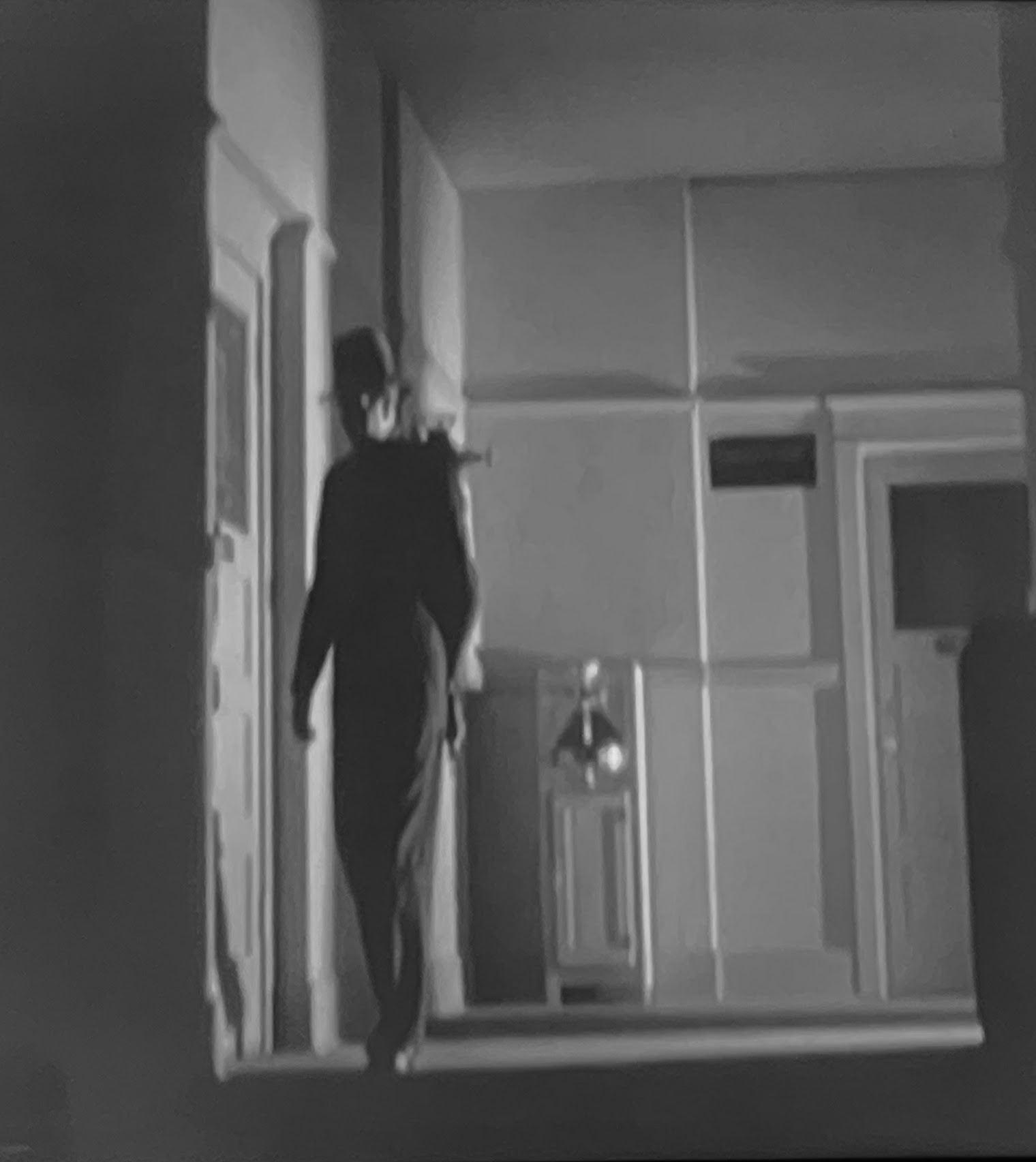
This film has a lot of shadow-and-light interplay in various scenes.


Friday, March 4, 2022

Harry Townes: From Huntsville to Hollywood and Back


I've written a number of posts on this blog about Alabama natives who have  found success in Hollywood, ranging from actresses before 1960 such as Dorothy Sebastian and Gail Patrick to more recent individuals such as Gail Strickland and two who also graduated from my high school, Kim Dickens and Ned Vaughn. Now comes Harry Townes, Huntsville native, prolific television actor and Episcopal priest. 

Harry Rhett Townes was born in Huntsville on September 18, 1914. I found him and his family in the 1920 U.S. Census via Ancestry.com At that time they rented a home on Eustus Street [probably Eustis Avenue near Maple Hill Cemetery; mistakes by census enumerators were common]. Harry was the younger son of Charles and Jeanne Townes; his brother was Halsey. Sister Jena was three years younger than Harry, who was listed as five at the time of the census. In the 1930 census when Harry was 15, the family lived at 809 Randolph Street. Father Charles is not listed; he had died on November 23, 1922 and is buried in Maple Hill Cemetery in Huntsville. 

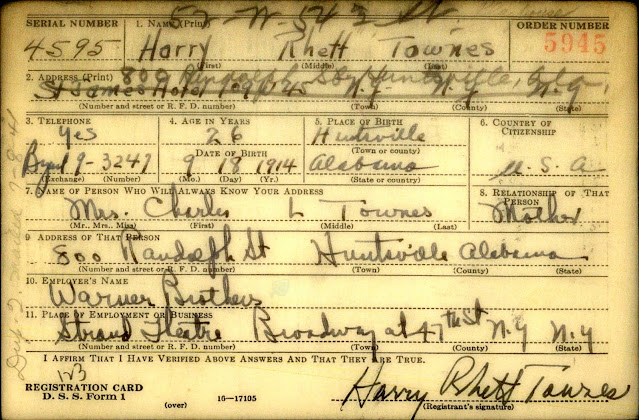
Presumably he graduated from high school in Huntsville, although I've yet to determine which one. Recent discussion about Townes on the Facebook "Huntsville Revisited" board indicated he went to Huntsville High. He spent time at the University of Alabama, where he may have caught the acting bug. Townes did not graduate; he's not listed in the UA directory of alumni anyway. He next appears in New York City, where he studied acting at Columbia University. I've run across one source that says he graduated there, but have yet to confirm it. His draft card, included below, puts him in New York in October, 1940. 

He picked up some Broadway credits before enlisting in the U.S. Army Air Corps, in which he served from 1942 until 1946. After his service, Townes returned to New York to act, picking up more stage work and making his first forays into television. 

As noted in the next paragraph, Townes' first tv credit was a Dumont program; the network broadcast from New York. Townes played the character of Peter Postman from 1949 until 1951. He also acted in episodes of two other programs from New York, Trapped and Robert Montgomery Presents. During this same period, 1950-1953, he also began acting in programs broadcast from Hollywood. 

The first television credit listed for Townes at the IMDB is The Magic Cottagea program on the Dumont TV network from 1949 until 1952. His final appearance came on the series Valerie in 1988. Between those dates he acted in episodes on dozens of shows, many multiple times. These included Perry Mason (5), Rawhide (4), Route 66 (3), Twilight Zone (2), Playhouse 90 (3), Studio One (12), Climax! (9), Kraft Theatre (15), Armstrong Circle Theatre (10), Ponds Theater (6), Gunsmoke (7) and The Fugitive (5). He played four different doctors in that many episodes of Quincy, M.E. Townes made single appearances on such programs as Ben Casey, The Outer Limits, The Virginian, Branded, Star Trek, The Big Valley, Mod Squad, Marcus Welby, M.D., Lou Grant, and Magnum, P.I. Whew! And all of these listed only scratch the surface of his tv credits. 

Townes acted in more than 200 television programs, but he also appeared in several films. These include Operation Manhunt [see more on this one below], The Mountain, The Brothers Karamazov, Cry Tough, Sanctuary, The Bedford Incident, In Enemy County and The Hawaiians.  

While in his thirties his sister Jeanne was diagnosed with terminal cancer. Following a vision she had, her disease went into remission. This event prompted Townes' own spiritual journey that eventually led him to the priesthood. He continued acting but put himself through theology school in Los Angeles. In 1973 at age 59 and following ten years of study he became a transitional Episcopal deacon and then was ordained Father Harry Townes at St. Paul's Cathedral in Los Angeles on March 16, 1974. He had several non-stipend assignments in that city, Hollywood and Palm Springs  as he continued to earn his living with film and television work. 

Townes retired from acting in 1988, and returned to Huntsville. According to city phone books available via Ancestry.com, he lived on Randolph Avenue near a childhood home in the mid-1990s and on Mountain Brook Drive SE from 1998 until his death on May 23, 2001. He apparently never married. Townes outlived the other members of his family. Mother Jeanne died in 1967 and is buried in Maple Hill. Sister Jean died in 1998 and is also buried in Maple Hill. Older brother Milton died in 1978 and was interred in Elmwood Cemetery in Birmingham.


Townes & Barbara Hale as Della Street in the Perry Mason episode “The Case of the Lazy Lover” first broadcast 31 May 1958. Townes made five appearances on the program.


Perry Mason "The Case of the Lazy Lover" May 31, 1958


Townes played a pharmacist in the "Incident of the Town in Terror" episode of Rawhide first broadcast March 6, 1959. A few of the herd's cattle die of what is feared to be anthrax, but Townes' character determines it's the milder cowpox. 


Nancy Kovak and Townes in Perry Mason "The Case of the Golfer's Gambit" January 30, 1966


Both of these photos are from the Perry Mason episode "The Case of the Woeful Widower" March 26, 1964. That's Jerry Van Dyke, younger brother of Dick, in the one below with Townes. 


Royal Dano, Inger Stevens & Townes in the "My Brother Richard" episode of Alfred Hitchcock Presents January 20, 1957. You can read discussions by Jack Seabrook  of other appearances by Townes on this series here and here


Townes in "Tail to the Wind" an episode of Gunsmoke from October 10, 1959


The Outer Limits "OBIT" November 4, 1963


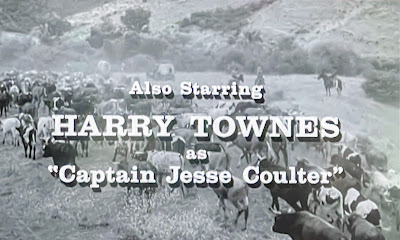
Townes as Captain Jesse Coulter in Rawhide "Seven Fingers" May 7, 1964


Townes appeared twice on Wanted Dead or Alive which starred Steve McQueen. This still is from "Mental Lapse" first broadcast on January 2, 1960. The other episode was "Vendetta", also in 1960.  


Operation Manhunt released in 1954 was an early film appearance by Townes, and he was even the male lead!


Townes World War II draft card filled out on October 16, 1940. Note his employer and place of employment! According to the Internet Broadway Database, Townes appeared in seven productions on Broadway between 1942 and 1969. I've yet to discover what he was doing for Warner Brothers, owner of the Strand in 1940. 

Source: Ancestry.com


Harry Townes' grave marker in Huntsville's vast Maple Hill Cemetery


Wednesday, October 20, 2021

Mobile and a "Mission of Fear"

I recently read this book which has resided on my shelves for many years and discovered that much of it is set in and around Mobile, Alabama. Let's investigate. 

George Harmon Coxe [1901-1984] was a prolific author of fiction in various genres--detective tales, mysteries, thrillers. He published 63 novels and dozens of stories between 1932 and 1975. Around 1922 he began work for various newspapers and published a few stories in the pulps. He won a Grand Master designation from the Mystery Writers of America in 1964. 

Mission of Fear was published in 1963. The novel is a "stand-alone", i.e. not one of Coxe's series works. Marion and John Hayden are living the happy married life in suburbia when a stranger appears with bad news: Marion's first husband Ted Corbin did not die in a plane crash as reported. That makes Marion a bigamist and liable for return of the rather large life insurance payout.

After a bit of detective work John figures he has located Corbin in Mobile. Hayden's trip to the city and the area occupies pages 96-142. He has a window seat on the flight from Atlanta to Mobile and observes the landscape as the plane descends. "The land beneath the wingtip seem gently rolling now, with cultivated areas interspersed with stands of pine. For the past few minutes they had flown over one river after another, each seemingly flowing southward toward the gulf or bay, but he was hazy about his geography in that area and he could only identify those which were shown on the airline map--the Alabama first, the Tensaw, the Mobile." 

Coxe also describes Hayden's drive from the airport into the city as he passes more and more development, a large shopping center, increasing traffic. He finally reaches his new motel a few blocks beyond Government Street. Other landmarks are mentioned such as Conti Street, and Hayden makes a couple of trips through the Bankhead Tunnel. One area also noted is Bayou La Batre. 

Corbin lives across the Bay in Fairview, apparently a stand-in for Fairhope. Why this name is changed but not others is a mystery. There is a Fairview in Alabama, but it's much further north in Cullman County. A significant portion of the Alabama section of the book is set in "Fairview". It also includes a description of the drive from Mobile to New Orleans when Hayden & Corbin decide to fly out of the Big Easy instead of Mobile. Pascagoula, Ocean Springs, Biloxi, Gulfport, Long Beach and Pass Christian all are mentioned. 

I've found no connection to Alabama in Coxe's biographical information online, but he did work for a newspaper in Florida at one point during his journalism career. Coxe has two other Alabama connections by way of films adapted from his work. The 1936 film Murder with Pictures was based on Coxe's first novel published the previous year. The female lead is Birmingham native Gail Patrick; I've written several blog posts about her life and career. Here's Flash Casey is a 1938 film based on Coxe's story "Return Engagement" first published in the March 1934 issue of the legendary Black Mask magazine. That film starred Boots Mallory, who grew up in Mobile. 

This novel is a fun read; Coxe was a writer who kept the story moving and created interesting characters. This title is the first thing by him I've read; I'll have to seek out more. Author James Reasoner has written an appreciation of Coxe that's available here


Wednesday, July 14, 2021

Actress Bonnie Bolding from Joppa

 On this blog I've written a number of posts about actresses with Alabama connections, mostly those whose careers began before 1960. These have included Lois Wilson, Gail Patrick, Dorothy Sebastian, Boots Mallory, Lottice Howell, Cathy O'Donnell, Wanda McKay, Viola Allen, Tallulah Bankhead, Joan Crawford, Frances Bergen, and women with more recent credits such as Gail Strickland and Kim Dickens. Next up is Bonnie Bolding, who had only seven acting credits from 1956 until 1958, four of them uncredited, but whose subsequent life was even more fascinating. 

According to her BhamWiki entry, she was born February 22, 1933, in Joppa, a small town in Morgan County. I've written about Joppa in a previous post. In his later years my uncle John Shores, mom's older brother, had a goat farm there, and I remember visiting a couple of times. 

Her parents were Aron T. [Oran? Orin?] and Gertha Earwood Bolding. In 1920 they were living in Ryan's Cross Roads in Morgan County according to that year's U.S. Census. He was 20 year's old, a farmer and could read and write. The same census says Gertha was 17 and also able to read and write. 

The Find-A-Grave site tells us more about Gertha. She was born in Hulaco in Morgan County on April 14, 1902 and died December 25, 1973; she is buried in Birmingham's Elmwood Cemetery. The site has an Earwood family photo in which Gertha can be seen. Find-A-Grave also says she married preacher Orin Thomas Bolding in June 1946; he was born in Joppa. His World War I draft registration card has the spelling of his first name as "Oran", and lists Gertha as his wife. 

I don't think I'm going to try and sort out this mess; I'll leave it to a family genealogist. See the map below to locate Ryan Crossroads, Hulaco and Joppa in Morgan County. 

Bonnie attended what is now Samford University, where she was a cheerleader, drum majorette and drama student. She was first runner-up in the Miss Alabama contest on her fourth try, which may have led her to Hollywood. She received a scholarship to the Pasadena Playhouse, but didn't remain in the business long. By 1969 she had been through two marriages--both to oil tycoons--and then become a stockbroker in New York City. She met  and married John Swearingen, CEO of the company that is now BP America. Her third oil man was the charm.

For three decades she was a major figure in American high society, making frequent appearances in newspapers and various magazines as the couple mingled with the likes of Prince Charles and Pierre Cardin, Bob Hope and Kirk Douglas, and Presidents--or former ones--Johnson, Nixon and Ford. They also engaged in major philanthropic efforts. Samford University received almost $3.5 million, much of it in support of the arts; and a campus building was named after her. 

Bonnie Bolding Swearingen died in Birmingham on August 2, 2020. Husband John had died in 2007. She is also buried in Elmwood Cemetery. Read more about her in the Chicago Sun-Times obituary. You can read a piece on the couple's generosity to Samford here. You can see some of the items at her estate sale held in early December 2020 here.

A very long piece from 2015 about the "John and Bonnie Show" is here. 


Bolding in the "Incident at Indian Springs" episode of the Cheyenne TV series first broadcast 24 September 1957


Source: BhamNow


Bonnie and John Swearingen

Source: Samford University 


On this map we see Ryan Crossroads, Hulaco, and Joppa [not to mention Egypt and Arab!] in Morgan County.

Source: Google Maps